


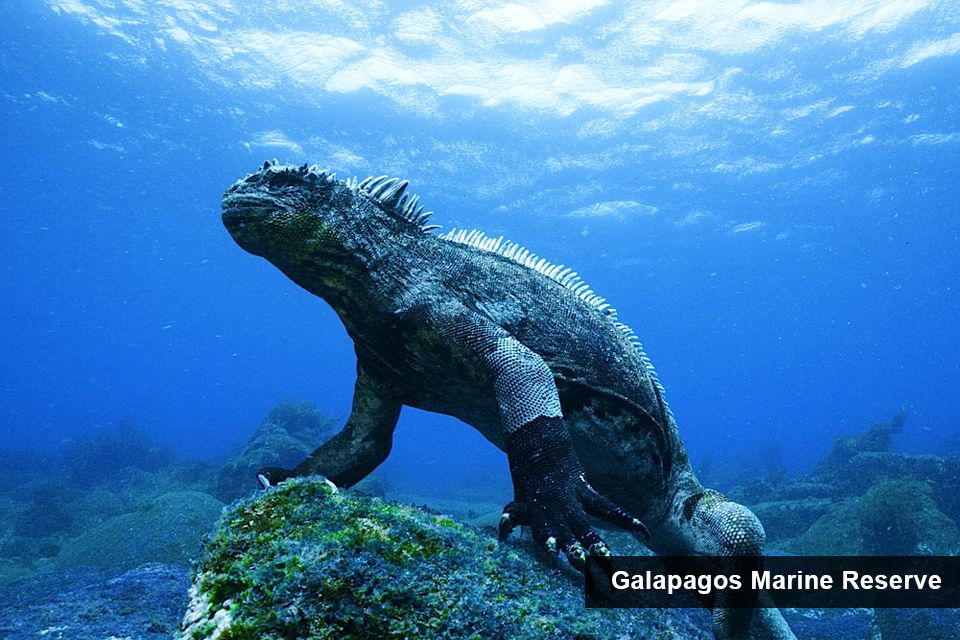
A paradise for anyone who loves wildlife and raw nature, the Galápagos Islands contain wonders you’ll find nowhere else on earth. Plying the islands’ shores and coastal waters are Galápagos giant tortoises that weigh more than 500 pounds. Marine iguanas that swim and eat seaweed and algae. Blue-footed boobies (seabirds), Galápagos penguins and many other incredible creatures. Such unique biodiversity has earned the archipelago a UNESCO World Heritage Site designation. Many visitors see the islands on a multi-day small-boat cruise, while others explore on land, hopping on ferries to get between islands. Either way, you will need to be with a certified guide at visitor sites in the national park, which composes 97% of the islands’ landmass.
Spot blue-footed boobies on a hike
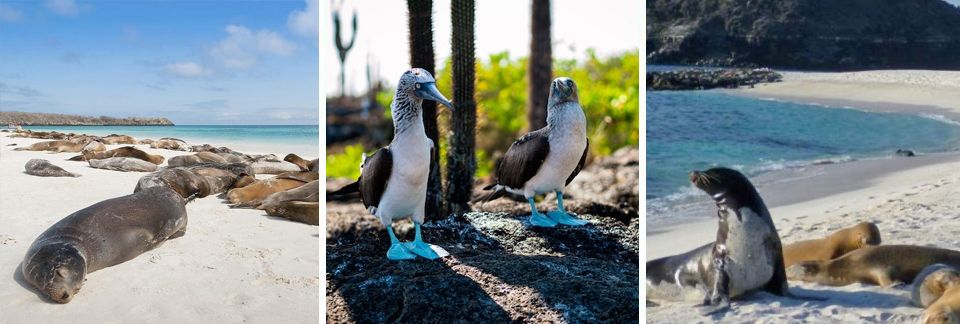
Join a guide to hike and explore the terrain on foot. North Seymour Island is just one of many locations with great places to walk, including a popular trail where a stroll among prickly pear cactus and palo santo trees will let you see species like like blue-footed boobies, great frigate birds, Galápagos sea lions and marine iguanas.
Snorkel with penguins off Bartolomé Island
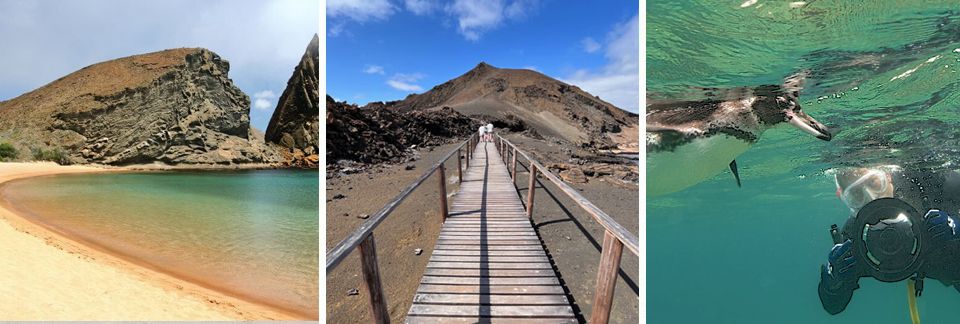
While many species stick to land, many more are in the sea, and snorkeling provides an excellent vantage point for encountering them. (If you have your own mask, consider bringing it from home to ensure just the right fit).
Join a tour to go for a snorkel in locations like Bartolomé Island – a great place to see penguins.
Set out on bucket-list SCUBA opportunities
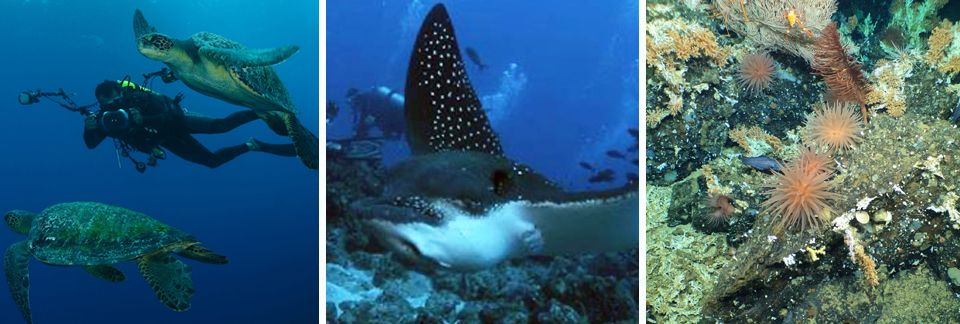
Experienced scuba divers place the Galápagos Islands on their bucket lists for good reason, for the Galápagos Marine Reserve teems with underwater wonders.
On a scuba trip, you’ll see spotted eagle rays, manta rays, Galápagos garden eels, bonitos, hammerhead sharks, Galápagos sharks, Pacific seahorses, Galápagos giant sea turtles and much more.
Keep in mind that the area’s strong currents and swells make it a challenging environment, one best suited to experienced divers.